Log

How to Log Bodyweight, Added Weight and Assistance
Record bodyweight reps, added weight and machine assistance as different values, with practical examples for your notebook and Log.
By Adrien BlancUpdated
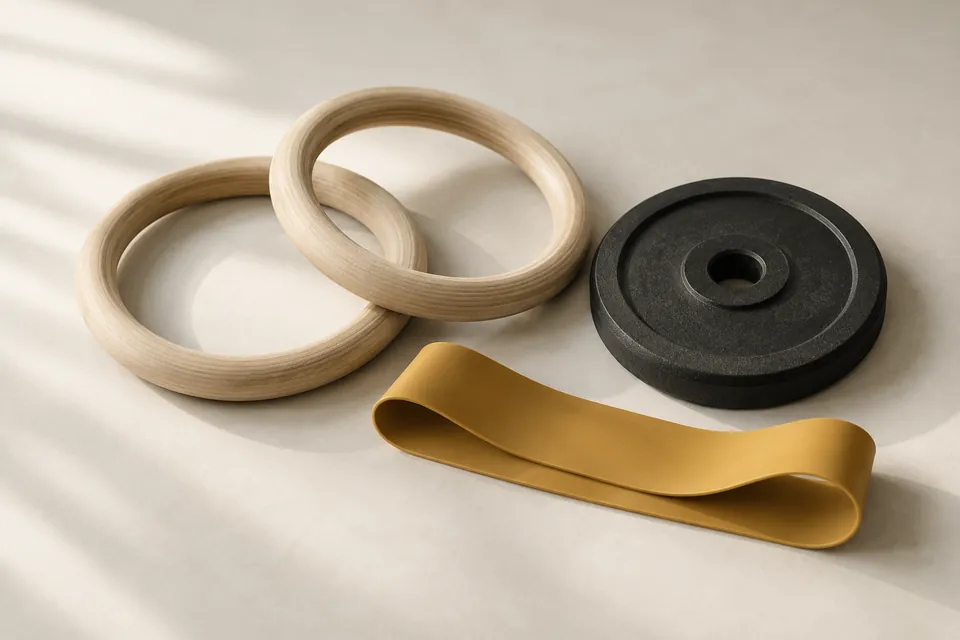
Keep three values distinct in a workout log: bodyweight reps, added weight and machine assistance. Log uses different recording modes for them. Writing only “pull-ups, 20 kg” leaves it unclear whether you mean 20 kg added or 20 kg of assistance.
Record Reps Without Inventing a Weight
For an exercise without added weight, record its name, variation and reps. “Pull-ups — 6, 5, 4 reps — no added weight” describes three sets. All numbers in this guide are invented examples, not targets.
In Log, choose the relevant bodyweight exercise and enter the reps. Don’t put your body weight in a field intended for added weight. A bodyweight measurement entered in settings is a separate piece of information.
When the variation changes, make it clear in the name or note. Elevated push-ups and floor push-ups should remain identifiable when you read your history.
Enter Only the Added Weight
For weighted pull-ups in Log, the weight field records the load added to your body weight. If you use 5 kg of added weight, enter 5 kg. Don’t add your body weight to that field.
In Notes or on paper, an explicit line would be “weighted pull-ups — +5 kg — 5, 5, 4 reps.” The plus sign means added weight here; it doesn’t replace the variation’s name. Use “no added weight” to distinguish another workout. The same convention works in pounds.
| Invented situation | Value to keep |
|---|---|
| Pull-ups without added weight | Reps; no additional weight |
| Pull-ups with 5 kg added | Reps and 5 kg added weight |
| Machine pull-ups with 30 kg assistance | Reps and 30 kg of assistance |
| A plank held for 30 seconds | Duration of 30 seconds |
Keep Assistance as an Assistance Value
For machine-assisted pull-ups, Log displays an Assistance field. Enter the machine’s assistance value, such as 30 kg. Under this convention, a larger number means more assistance on the same equipment with the same settings.
Don’t enter “−30 kg” as though assistance were negative added weight. Don’t replace the number with “body weight minus assistance,” either. Keep the value you actually selected on the machine.
To compare workouts, record the same machine and settings. “8 reps, 30 kg assistance, machine A” preserves context that “8 × 30” removes. The guide to comparing workouts shows how to identify changes.
Identify Bands Without Inventing Kilograms
For a band-assisted pull-up, keep the band reference and setup in your note: for example, “band A, same support position.” Color alone may be ambiguous when you change equipment.
Log’s catalog convention is to keep these details in a note alongside the reps. Don’t assign an arbitrary assistance weight in kilograms or pounds based on color. A new band reference is a change to preserve in the history.
Keep Duration Separate from Reps
For a plank, record each hold’s duration: “30 s; 25 s.” For a side plank, specify each side’s duration when they differ. A duration should not become a rep count in the record.
Before saving, check the variation, the kind of value and its unit. The general guide to sets, reps and weight covers the conventions that apply to other exercises.